How Infrared Thermography Helps Business Owners Protect and Optimize the Building Envelope
Problems such as roof moisture, air leakage, insulation gaps, and failed seals often develop quietly — infrared thermography gives owners a practical way to find them earlier.
Your building is one of the largest assets your business will manage. Like any major asset, it performs better when it is understood, monitored, and maintained using reliable information.
Problems such as roof moisture, air leakage, insulation gaps, and failed seals often develop quietly. By the time there is visible staining, an active leak, a mold concern, a tenant complaint, or a sharp increase in heating or cooling costs, the issue may already be more advanced — and more expensive to address.
Building envelope infrared thermography gives business owners a practical way to identify hidden issues earlier, helping support better maintenance, repair, and capital planning decisions.
What is building envelope infrared thermography?
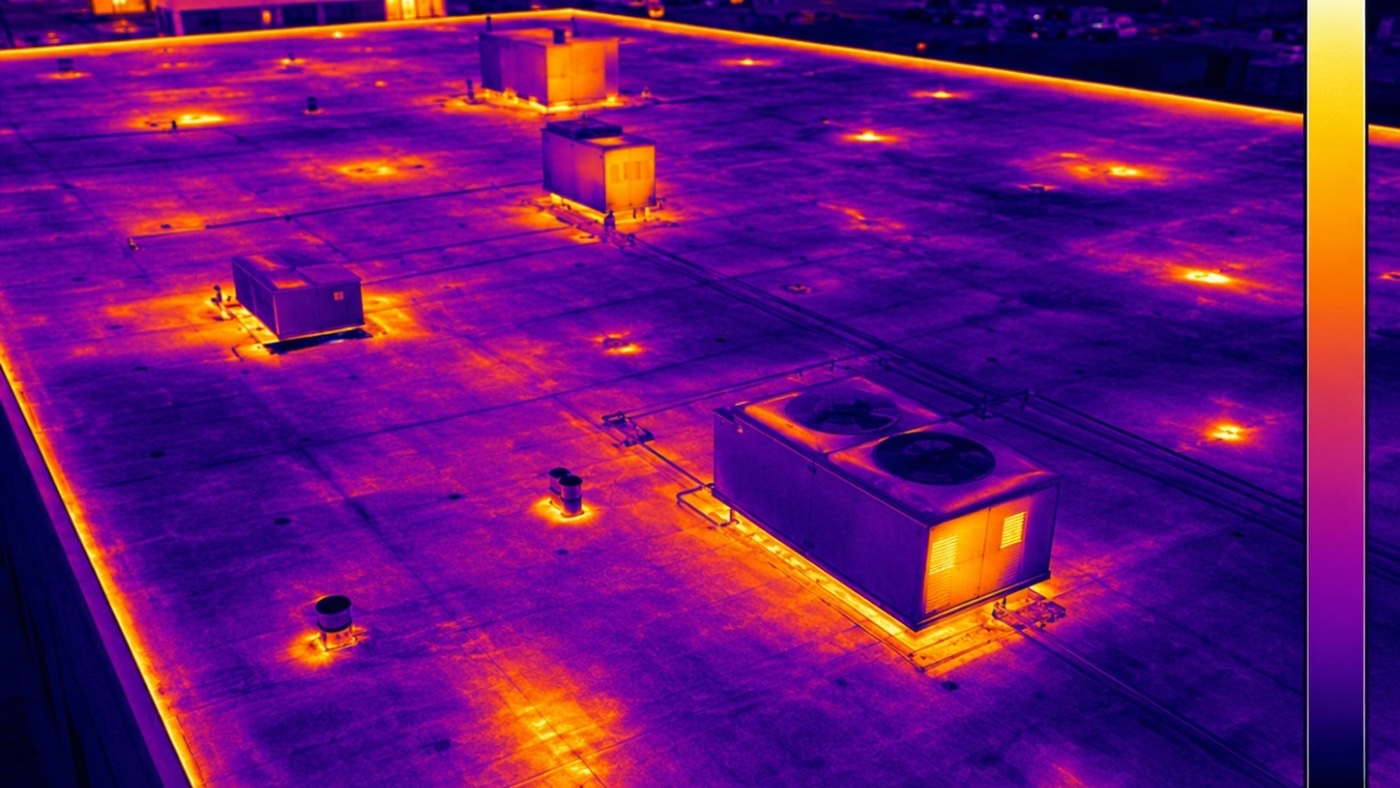
Building envelope infrared thermography is a non-invasive assessment method that uses thermal imaging to detect surface temperature differences across roofs, walls, windows, doors, and other enclosure components.
It is important to clarify what infrared imaging does — and does not — do. Thermal imaging does not see through walls or roofs. Instead, it detects temperature patterns on surfaces. When those patterns are interpreted correctly and in context, they may indicate areas where heat, air, or moisture are behaving differently than expected.
For commercial and industrial properties, this can help reveal conditions that deserve closer attention before they become larger operational or financial problems.
Why business owners use infrared thermography
Business owners, property managers, and facility teams often use infrared thermography to support:
- Preventive maintenance planning, by identifying areas of concern before visible failure occurs.
- Roof condition investigations, where trapped moisture may be reducing insulation performance or accelerating deterioration.
- Energy performance reviews, by highlighting possible air leakage, insulation gaps, and thermal bridging.
- Occupant comfort improvements, by locating cold spots, warm spots, and drafts tied to envelope weaknesses.
- Repair prioritization, so limited maintenance budgets can be directed where they matter most.
- Capital planning and due diligence, when evaluating the condition of building components over time.
Infrared thermography is especially valuable when owners want better insight without immediately opening assemblies or relying only on visible symptoms.
What infrared imaging may reveal
A properly conducted infrared review may help identify patterns in several parts of the building envelope.
Roof assemblies
Thermal patterns on low-slope or commercial roof systems may suggest possible saturated insulation, trapped moisture, heat-retention anomalies, or drainage-related irregularities.
Moisture trapped in a roof system can reduce insulation effectiveness, contribute to deterioration of roofing materials, and shorten the useful life of the roof assembly.
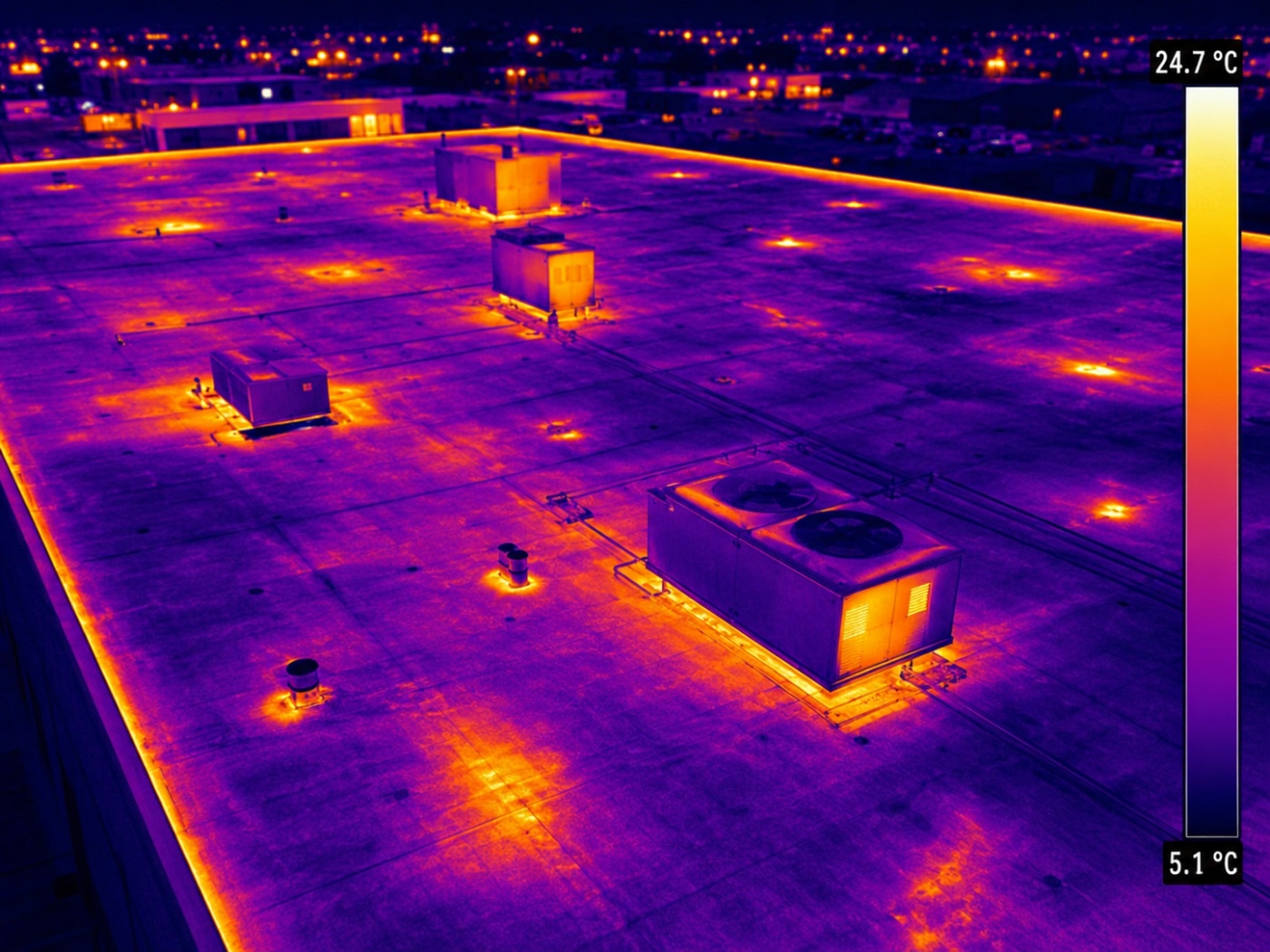
This is often where roof assessment services can help provide further context and next-step recommendations.
Exterior walls
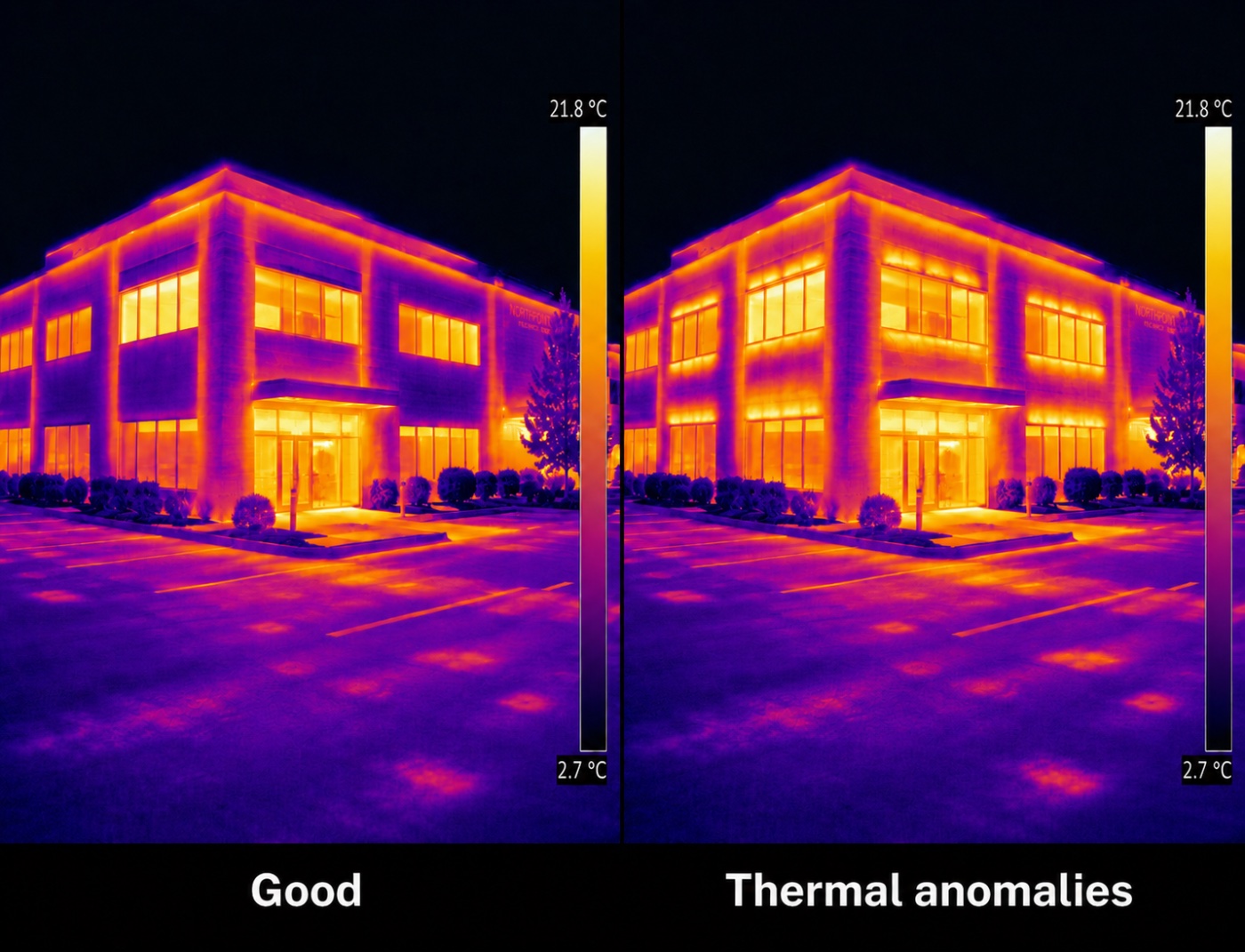
Infrared imaging may point to missing or displaced insulation, moisture-related temperature patterns, heat-transfer irregularities, and air movement through the wall assembly.
These conditions can affect energy performance, durability, and occupant comfort — especially when viewed as part of broader building envelope consulting.
Windows and curtain walls
Thermal imaging may indicate failed seals, perimeter weaknesses, thermal bridging, and unwanted air leakage. For office, retail, and industrial buildings, these issues can contribute to heat loss, drafts, condensation risks, and occupant complaints.
Doors, loading areas, and penetrations
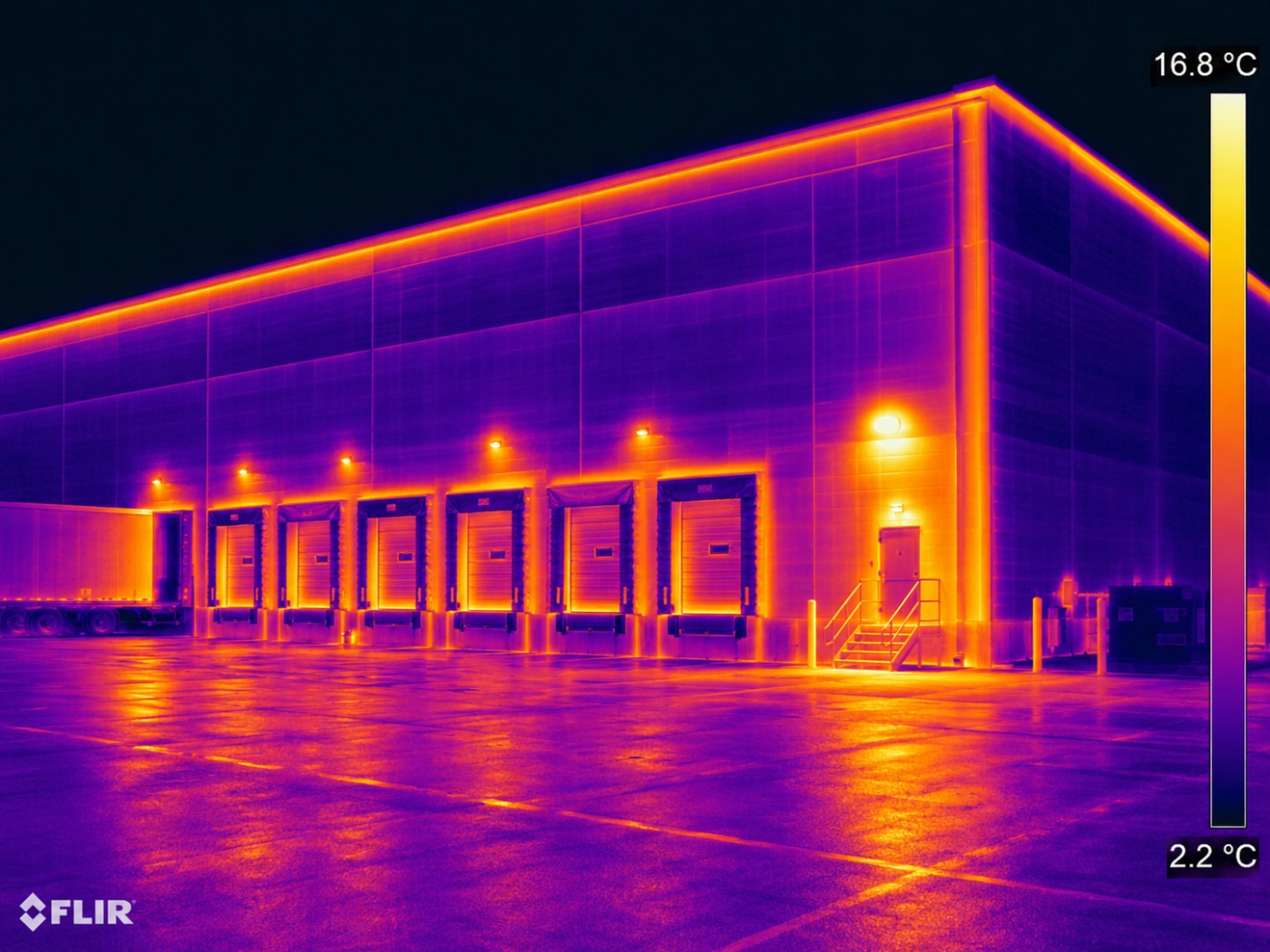
Infrared assessments often help identify infiltration and exfiltration, gaps in the enclosure, weak weatherstripping, and leakage around openings and penetrations. These are common problem points in buildings with frequent use, large overhead doors, or aging enclosure components.
Interior spaces and mechanical influence zones
Inside the building, thermal imaging may reveal cold or warm spots, potential air leakage paths, insulation gaps, and temperature effects near mechanical discharge areas. This can help connect occupant comfort concerns to possible enclosure or air-movement issues — especially when considered alongside broader building performance assessments.
Why early detection matters
Many building envelope problems do not announce themselves right away. A roof may hold moisture long before an interior leak appears. Air leakage may drive up cooling costs before anyone notices a draft. Failed seals may create seasonal comfort complaints long before a formal investigation is requested.
Finding these issues earlier can help business owners:
- reduce the risk of costly reactive repairs
- support better budgeting and maintenance timing
- improve building performance
- extend the service life of roof and wall assemblies
- reduce strain on HVAC systems
- address concerns before they affect tenants, staff, or operations
For buildings with recurring or unclear symptoms, a more in-depth review may also involve forensic building investigations to confirm causes and guide remedial action.
What infrared thermography cannot do on its own
This is one of the most important points for decision-makers.
Infrared thermography is a diagnostic tool — not a final verdict by itself.
A thermal scan identifies patterns. A qualified assessment interprets those patterns in context, considering building type, weather conditions, construction details, and how the building is operating at the time of the review.
Significant findings may need to be confirmed using other methods, depending on the purpose of the assessment. That measured approach is part of sound building science practice, and may also align with broader commissioning and performance review efforts.
When to consider an infrared building envelope survey
A business owner may want to consider infrared thermography when:
- energy costs have increased without a clear explanation
- tenants or occupants report drafts or uneven temperatures
- there are signs of recurring leaks or moisture concerns
- a roof or façade is aging and condition data is needed
- recent repairs need to be reviewed
- a property acquisition or capital planning exercise is underway
- seasonal performance issues keep returning
In many cases, the value is not just in finding one isolated issue. It is in gaining a clearer picture of how the building envelope is performing as a system.
A practical tool for better building decisions
For owners and operators, better information supports better decisions. Infrared thermography can help uncover hidden conditions in the building envelope before they develop into larger failures, tenant issues, or avoidable energy loss.
When used as part of a broader assessment strategy, it can support more informed maintenance planning, targeted repairs, and stronger long-term asset management.
If you are evaluating roof moisture, air leakage, or other building envelope concerns, contact BlueBridge Group to better understand the conditions affecting your property and the practical next steps for investigation or assessment.
Concerned about your building envelope?
If you are evaluating roof moisture, air leakage, or other envelope conditions, we can help you understand what is happening and the practical next steps.
Book a 20-Minute Building Review