How Much Money Would Solar Actually Save Your Commercial Building?
A realistic look at commercial solar ROI in Canada — payback periods, incentive stacking, and a 25-year savings model built on conservative assumptions.

Why this is the first question every owner asks
Before considering solar, most commercial building owners ask the same thing: how much will this actually save?
It is the right question. Commercial solar can deliver strong long-term returns in Canada, but only when modeled conservatively and based on real building data. Many proposals rely on ideal conditions and overly optimistic assumptions that do not reflect actual operations.
If you are evaluating solar for your property, working with a provider offering commercial solar advisory services can help ensure projections are grounded in reality.
Solar savings depend on multiple variables:
- electricity rates and escalation
- daytime energy consumption
- export compensation rules
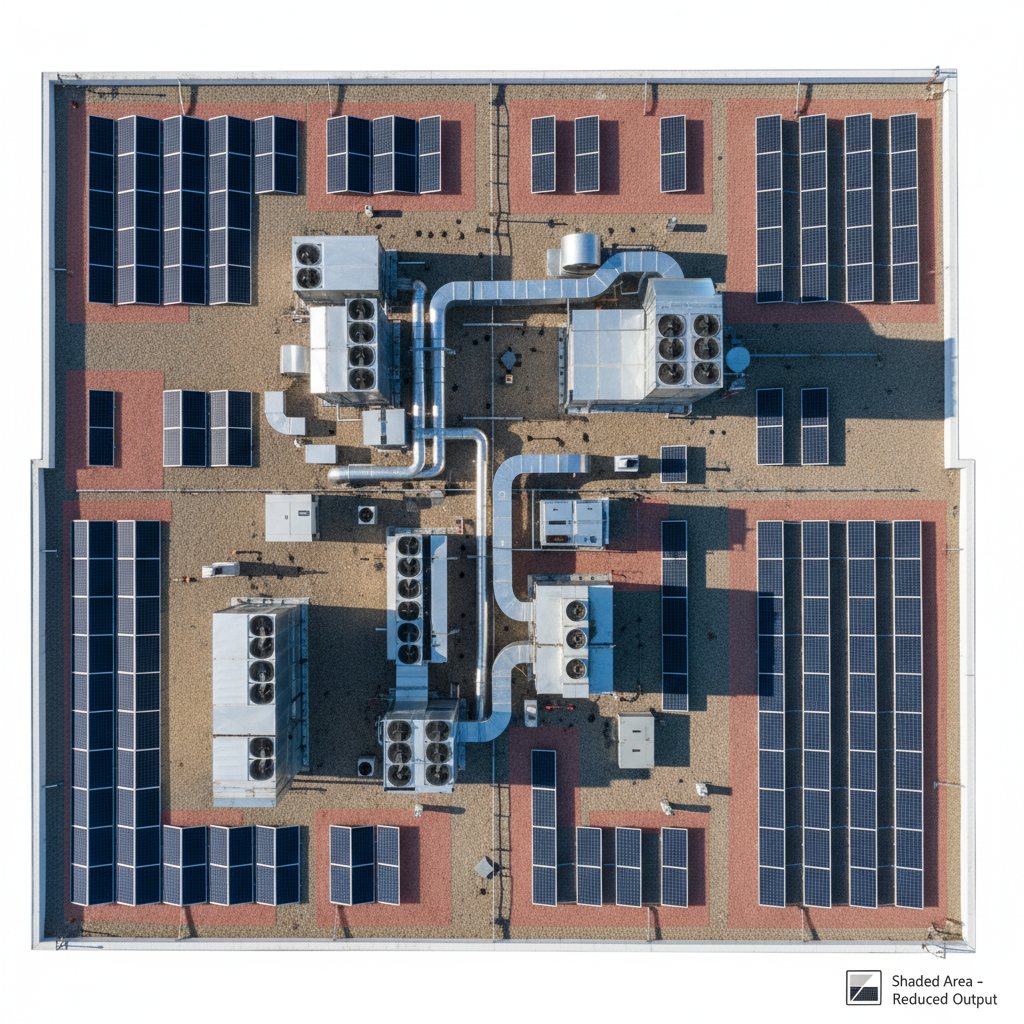
- roof constraints and shading
- incentive eligibility
What solar actually offsets on a utility bill
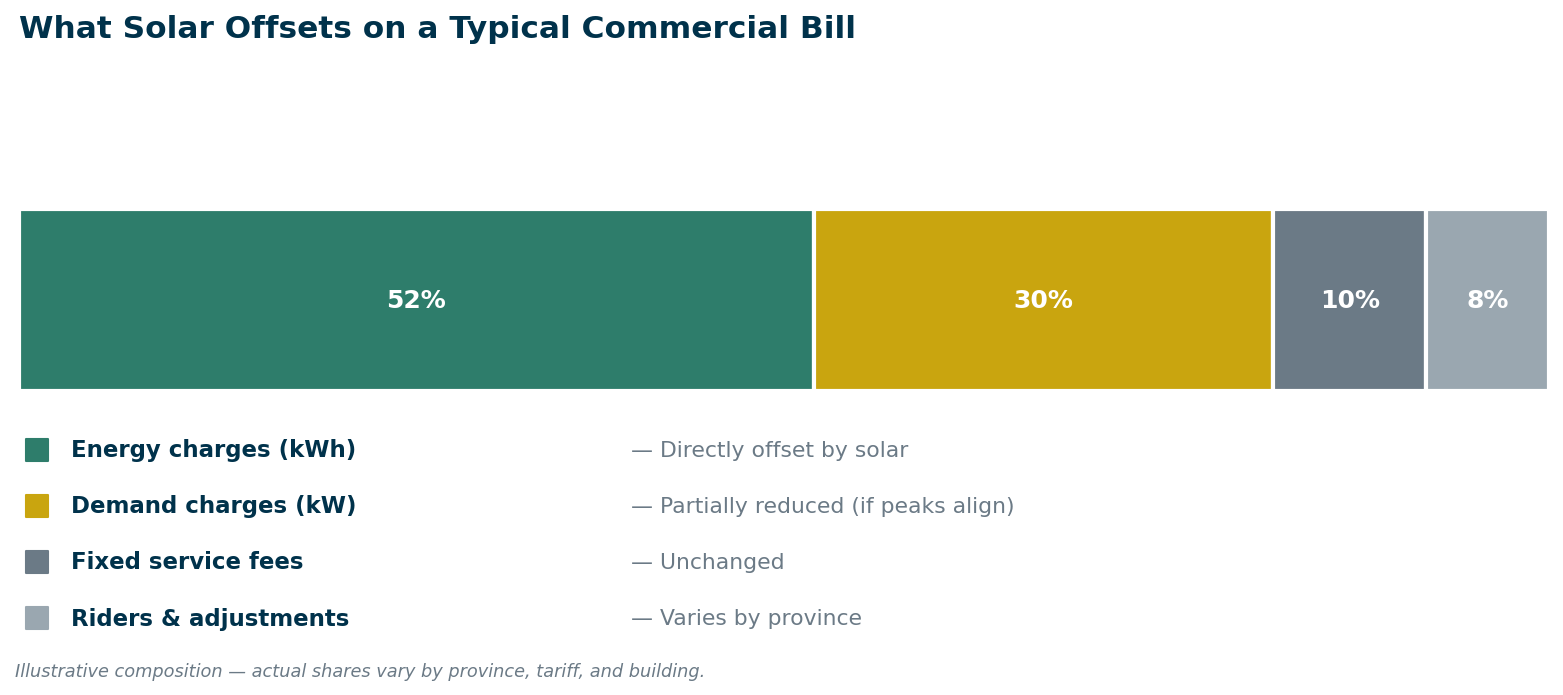
A commercial utility bill has multiple components, and solar affects each differently:
- Energy charges (kWh): the primary source of savings, through offsetting purchased electricity
- Demand charges (kW): may be reduced if peak demand aligns with solar production
- Fixed service fees: typically unchanged
- Provincial adjustments: vary by province and tariff structure
- Time-based pricing: savings depend on when energy is used vs. generated
You can review how commercial electricity pricing works through your provincial provider, such as Hydro-Québec's business rates.
Two identical systems can produce very different savings depending on how the building consumes electricity.
6 factors that determine real solar savings
1. Electricity rates and escalation. Higher rates increase savings. For example, Alberta's Rate of Last Resort is outlined by the Alberta Utilities Commission and AESO, with additional delivery costs increasing total rates.
2. Building load profile. Buildings that consume energy during the day benefit most. Retail, industrial, and institutional properties tend to perform well.
3. Roof orientation and shading. South-facing roofs with minimal shading produce the best results. Equipment and obstructions reduce usable space.
4. System size. Larger systems reduce cost per watt, but oversizing can reduce ROI if excess energy is exported at lower rates.
5. Incentives and tax treatment. Eligible projects can access up to a 30% Clean Technology Investment Tax Credit (ITC) — see Government of Canada program details — plus accelerated depreciation under the applicable CCA classes.
6. Export compensation structure. Export treatment depends on provincial rules and utility frameworks. Natural Resources Canada provides a useful overview of solar adoption in Canada.
Realistic solar payback period in Canada
Many proposals advertise a solar payback period for business of 6–8 years. While achievable, this depends on accurate modeling.
With conservative assumptions and proper incentives, many commercial projects fall within a 6 to 8 year payback. This assumes:
- real production data
- verified incentives
- conservative degradation and operating assumptions
25-year commercial solar ROI example
The following is an illustrative Canadian commercial system, modeled with realistic ranges rather than best-case numbers.
Incentives
Performance Assumptions
Note: the CCA tax-savings estimate reflects depreciation on the capital cost after the ITC reduces the undepreciated capital cost base, at an illustrative combined corporate tax rate. Actual values depend on your province, tax position, and CCA class.
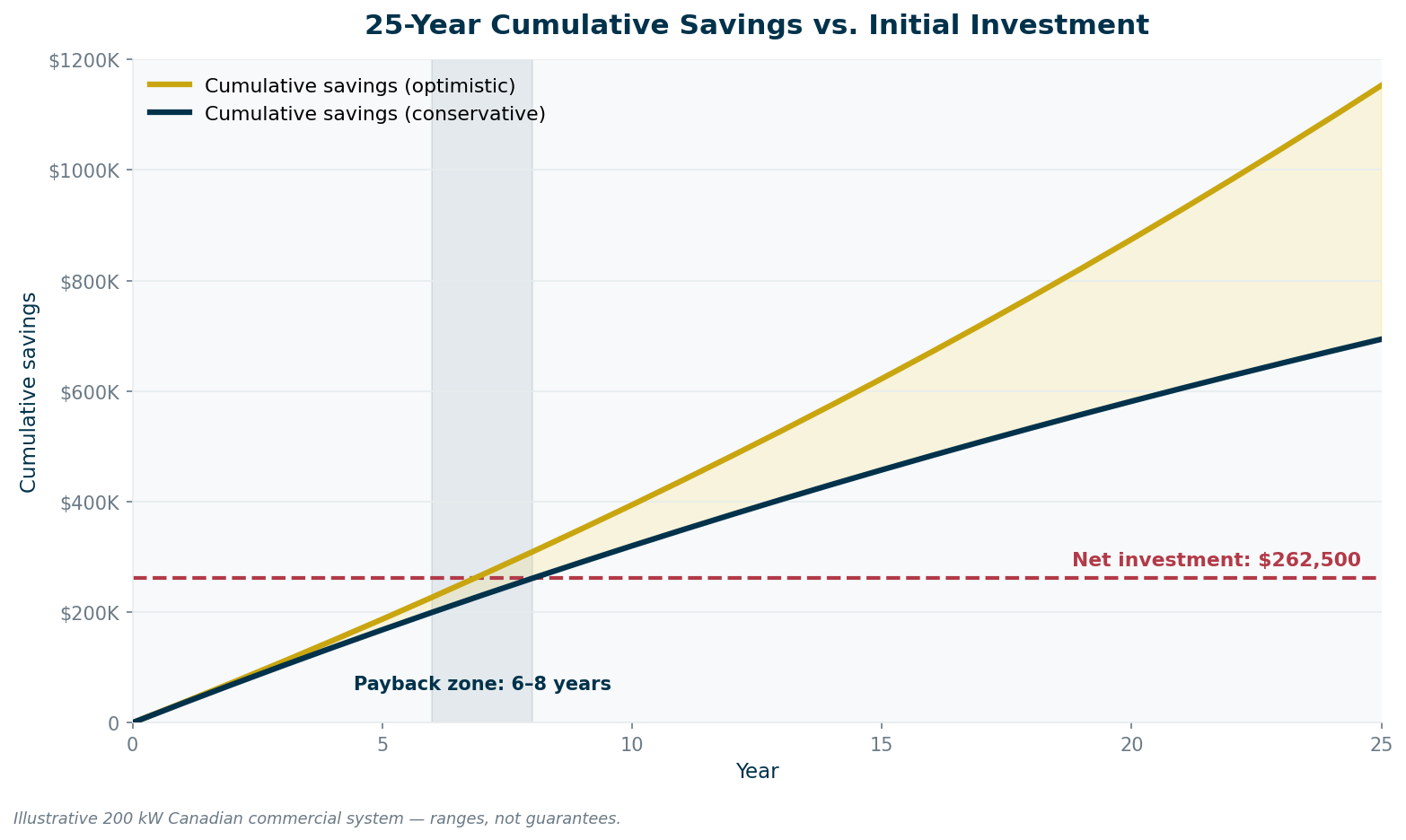
25-year net savings range from approximately $400,000 to $900,000. This range-based approach reflects real-world uncertainty and produces more credible financial expectations than single-point projections.
Example: retail plaza performance
A 50,000 sq. ft. retail plaza with consistent daytime usage typically achieves stronger results:
- high daytime consumption increases self-use
- less reliance on exporting energy
- stronger ROI compared to office buildings with lower daytime load
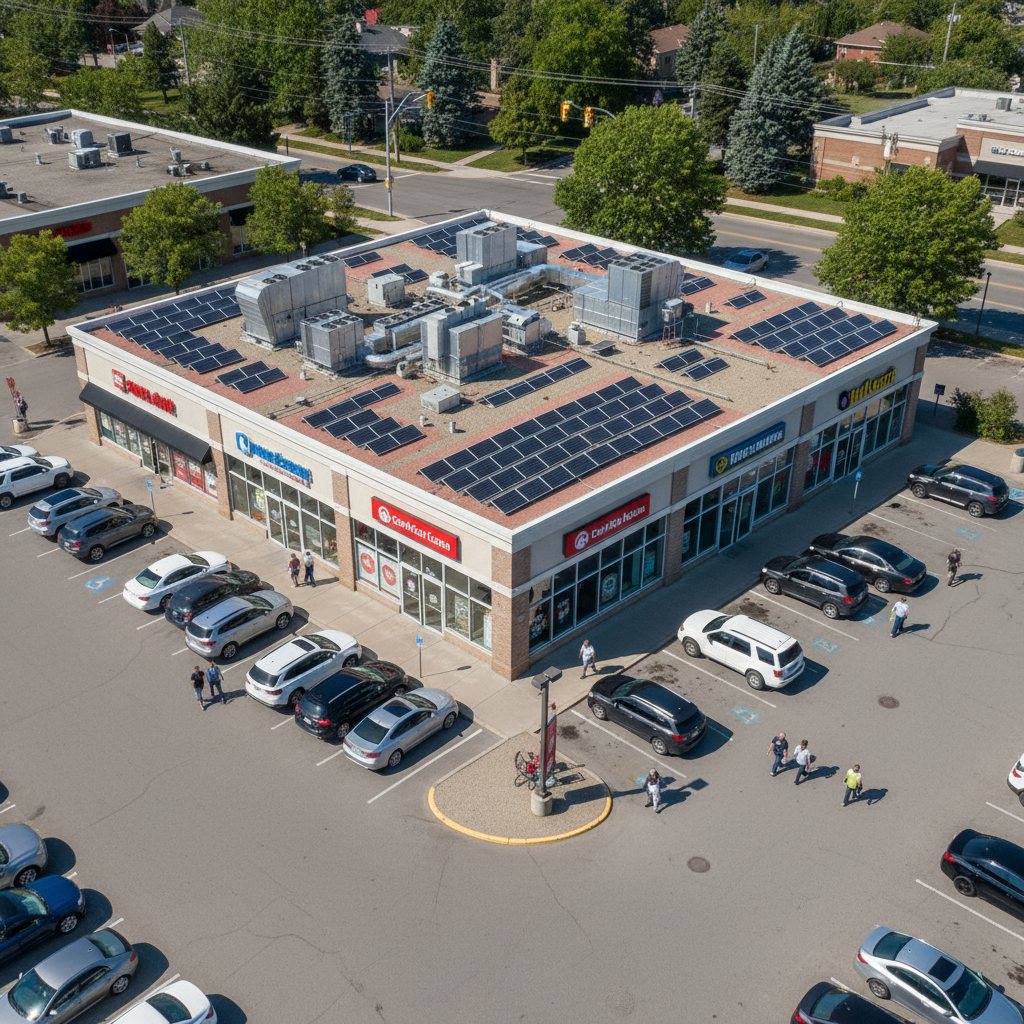
The more energy used on-site, the better the economics.
Why solar ROI is often overstated
Common issues in overly optimistic proposals:
- ignoring roof obstructions
- skipping structural or electrical upgrade costs
- misaligned roof replacement timing
- overstated production assumptions
- underestimated permitting or interconnection delays
These do not make solar a bad investment, but they highlight the importance of accurate modeling.
Why independent analysis matters
Reliable solar modeling starts with the building itself. A proper evaluation includes:
- interval load data analysis
- roof condition and lifecycle alignment
- structural and shading constraints
- utility tariff modeling
- realistic incentive application
Working with an independent advisor allows you to compare solar proposals on a like-for-like basis and avoid costly surprises. If you are evaluating solar for your commercial property, contact BlueBridge Group for a 25-year model built on your real building data — not generic proposal software.
Your roof and your solar decision are the same decision.
If your membrane is 15+ years old, you're inside the window where a combined envelope-and-solar project beats two separate ones. Grab the 10-minute guide.
Read the Decision Window Guide →Get a custom solar savings model
A 25-year model built on your real building data — not generic proposal software.
Request Your Analysis